Most of us have at least one mole. Some have been there since childhood and are barely noticed, while others sit in places where they regularly catch on clothing, jewellery or razors.
A mole may also become something you feel increasingly self-conscious about, particularly when it is on the face, neck or another visible area.
Although most moles are harmless, it is important not to assume that every mole is suitable for cosmetic removal. Any mole that is new, changing, painful, itchy, bleeding or inflamed should be assessed by a GP before treatment is considered.
If you have a mole that has already been confirmed as benign and you are considering removal for cosmetic or practical reasons, a professional consultation is the right place to begin.
What Is a Mole?
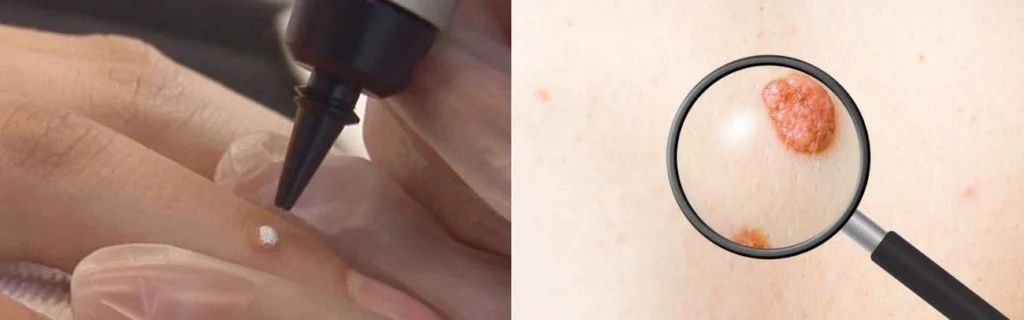
A mole is a small area of skin made up of pigment-producing cells called melanocytes.
Moles can differ greatly in appearance. Some are flat and smooth, while others are raised or slightly textured. Their colour can range from light brown and pink to dark brown or black.
You may be born with some moles, while others can appear during childhood or early adulthood. Most remain harmless and do not require treatment.
The important thing is to become familiar with your own skin. That makes it easier to notice when a mole looks different from the others or begins to change.
Why Might Someone Consider Mole Removal?
There is no single reason why people enquire about mole removal.
For some, it is about confidence. A noticeable mole may have bothered them for years, particularly when it sits in a prominent area.
For others, the problem is physical irritation. A raised mole may:
- catch on clothing or jewellery;
- rub against a bra strap or waistband;
- become irritated during shaving;
- feel uncomfortable during everyday activities.
Some people want advice because they are unsure whether removal is possible.
Whatever your reason, the first step should be an assessment rather than booking treatment immediately.
When Should a Mole Be Checked by a GP?
A mole that is new, changing or has unusual features should be assessed by a GP before any cosmetic treatment is considered.
The ABCDE guide can help you recognise some changes that may need medical attention:
A – Asymmetry: one half looks different from the other.
B – Border: the edges have become uneven, blurred or irregular.
C – Colour: there are several colours or an uneven distribution of colour.
D – Diameter: the mole is becoming larger, particularly if it is more than around 6mm across. However, melanomas can sometimes be smaller.
E – Evolving: it is changing in size, shape, colour or behaviour.
You should also contact your GP if a mole becomes itchy, painful, inflamed, crusty or begins to bleed. A new or changing area of skin should also be checked, including changes on the palms, soles of the feet or beneath the nails.
These symptoms do not automatically mean that something is wrong. However, it is important to have them properly assessed rather than covering them up or arranging cosmetic removal.
Can Moles Be Removed with CryoPen?
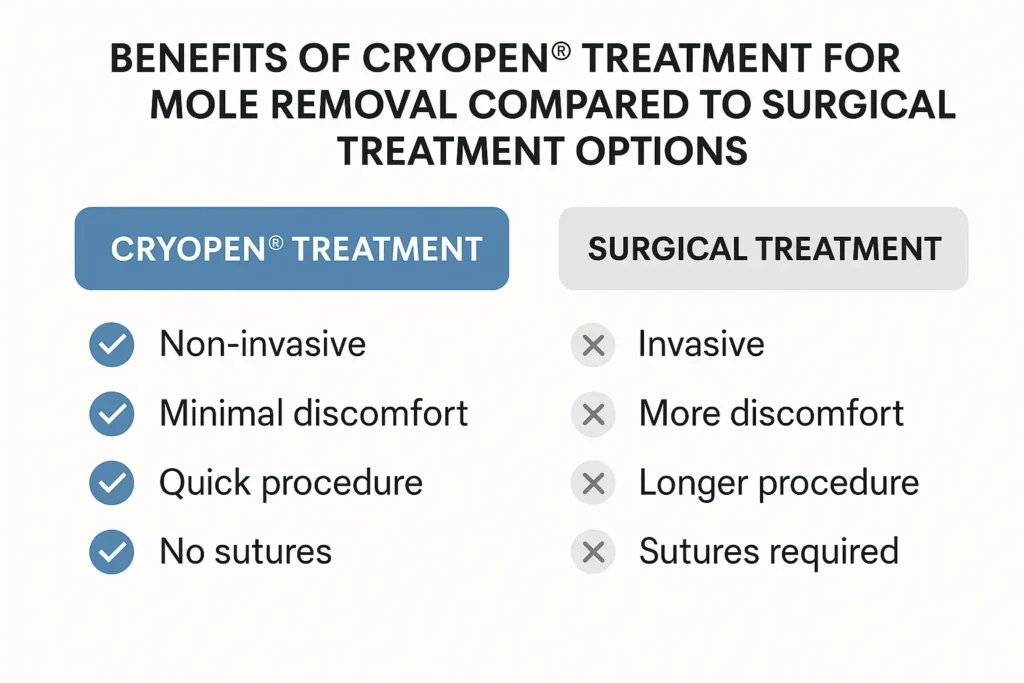
CryoPen uses a controlled jet of nitrous oxide to freeze targeted tissue. Cryotherapy is commonly used for a range of benign skin lesions, including certain warts, skin tags and seborrhoeic keratoses.
CryoPen may be suitable for certain benign skin lesions following an individual assessment. Where the lesion is a mole, the practitioner may require confirmation that it has been medically assessed and is benign before treatment is considered.
CryoPen is not appropriate for every mole. Treatment suitability can depend on:
- the mole’s appearance;
- its size and depth;
- where it is located;
- whether it has changed;
- whether a medical diagnosis has been obtained;
- the likelihood of scarring or pigmentation changes.
Suspicious or changing moles should not be treated cosmetically. You will be advised to contact your GP if there is any uncertainty about the lesion.
What Happens During Your Consultation?
Your consultation allows you to explain what is bothering you and ask any questions you may have.
The practitioner will examine the area and ask whether the mole has changed in size, shape, colour or sensation. They may also ask how long it has been present and whether it has previously been assessed.
If the practitioner notices anything that requires further investigation, cosmetic treatment will not go ahead. You will be advised to contact your GP or an appropriate medical professional for assessment.
When cosmetic treatment appears appropriate, the practitioner will explain:
- whether CryoPen is suitable;
- what the treatment involves;
- how the area may look and feel afterwards;
- the likely healing process;
- possible side effects and risks;
- whether more than one appointment may be needed.
You should then have enough information to decide whether you feel comfortable proceeding.
What Does CryoPen Treatment Feel Like?
People experience cryotherapy differently.
You may notice a brief cold or stinging sensation while the area is treated. This usually settles quickly once the application stops.
Treatment is often brief, although the total appointment time will depend on the number, size and position of the areas being treated.
Afterwards, the skin may appear red or swollen. A small blister or scab can sometimes develop as the area heals.
It is important not to pick or scratch the treated skin. Your practitioner will give you aftercare advice based on the area treated and how your skin responds.
Will the Treated Area Disappear Straight Away?
The treated area will not usually disappear immediately after CryoPen treatment.
The treated tissue changes gradually as the skin heals. It may darken, form a crust or scab and then reduce over time.
Healing varies from person to person. It can also depend on the size and depth of the lesion, its position and your skin type.
Some areas may respond to one session, while others may require further treatment. This should be discussed honestly during your consultation, as no responsible practitioner can guarantee a particular result.
Can Mole Removal Leave a Mark?
Any procedure that removes or damages skin tissue carries some risk of leaving a mark.
Possible effects can include:
- temporary redness;
- swelling or blistering;
- scabbing;
- lighter or darker pigmentation;
- changes in skin texture;
- scarring.
Your practitioner should discuss these risks before treatment, particularly if the mole is in a visible area or if your skin is prone to pigmentation changes or raised scarring.
It is important to weigh the reason for treatment against the possibility of a visible mark. Your practitioner will discuss this with you so that you can decide whether treatment feels worthwhile.
Why Choose LA LIPO?
At LA LIPO, the consultation is an important part of the treatment process.
We do not believe every mole or skin lesion should automatically be removed. The area must first be assessed to determine whether cosmetic treatment appears appropriate.
If we believe your GP should check a mole, we will explain this clearly and will not proceed with treatment.
Where treatment is suitable, we will discuss the process, likely healing and possible risks so that you can make an informed choice without pressure.
We aim to offer straightforward advice and ensure that your safety comes before cosmetic treatment.
Frequently Asked Questions
Are all moles suitable for CryoPen treatment?
No. Suitability depends on the type, appearance, size, depth and location of the mole. New, suspicious or changing moles must be medically assessed and should not be treated cosmetically.
Do I need my GP to check the mole first?
Yes, this may be required. Any mole that is new, changing or has unusual features should be assessed by a GP before cosmetic treatment. The practitioner will explain whether medical confirmation is needed in your individual case.
Is mole removal painful?
You may feel a brief cold, stinging or tingling sensation. Sensitivity varies depending on the treatment area and the individual.
How long does the area take to heal?
Healing times vary. The area may become red, darken or form a scab before settling. Your practitioner will explain what to expect and how to care for it.
Will one treatment be enough?
Some lesions respond after one treatment, while others may need another appointment. This cannot always be predicted in advance.
Can I remove a mole myself?
No. You should never cut, burn, freeze or apply unregulated mole-removal products at home. Doing so can cause infection, scarring and may delay the diagnosis of a suspicious lesion.
Can a cancerous mole be removed with CryoPen?
CryoPen cosmetic treatment is intended for appropriate benign lesions. Any mole suspected of being cancerous requires medical assessment and treatment through the correct healthcare pathway.
Thinking About Mole Removal?
A mole may be harmless but still affect your confidence or become irritated by clothing, jewellery or shaving.
The safest place to begin is with an individual consultation. We can look at the area, discuss what has been bothering you and explain whether cosmetic treatment may be appropriate.
If the mole is new, has changed or has any features that require medical investigation, treatment will not go ahead and we will advise you to contact your GP.
Where CryoPen treatment is suitable, we will explain the procedure, possible risks, expected healing and aftercare before you decide whether to proceed.
To arrange a consultation with LA LIPO, call 03300 100 238.